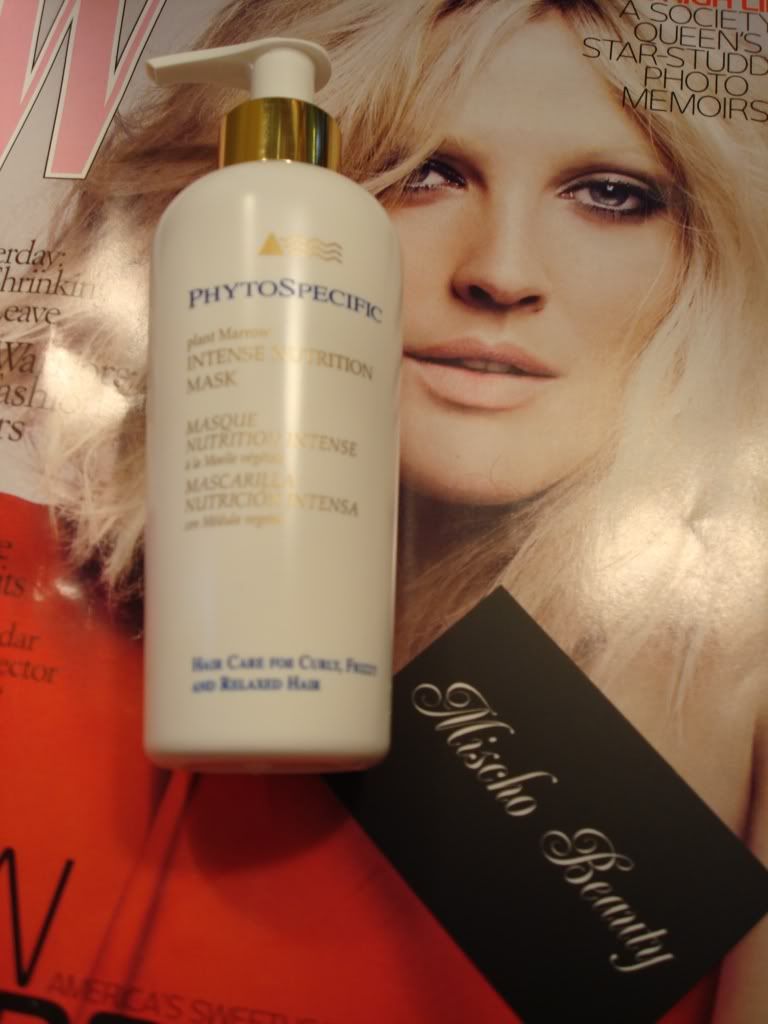
Showing posts with label hair relaxer. Show all posts

Mischo Beauty in the News!


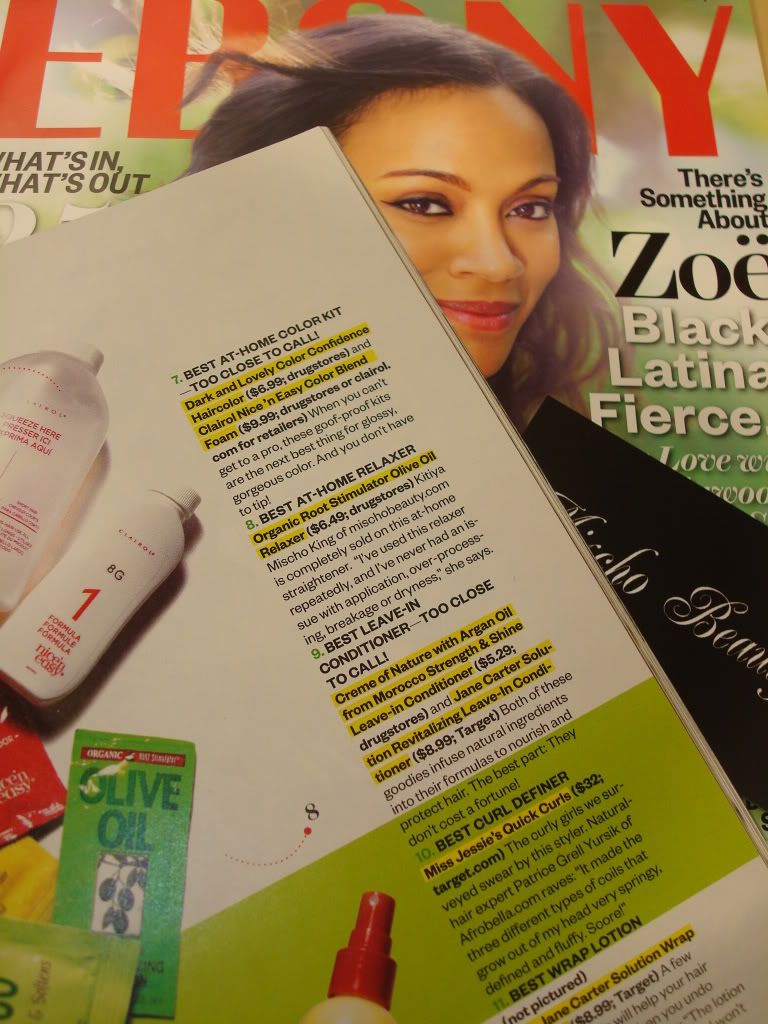
While we were away I was informed by my Spelman sister Spring, and my beauty blogging friend Joi, that I'd been quoted in the September issue of Ebony Magazine. I was included in "The Ebony Beauty & Grooming Awards" feature on page 69! A few months earlier, I'd been asked to share my thoughts on my favorite at-home relaxer (which happens to be the Organic Root Stimulator Olive Oil Relaxer) and had no idea my feedback would be shared with the world!

While I don't really advocate self-relaxing (hey, I'm a licensed cosmetologist!) for many reasons I've discussed on the blog many times before, I will relax my own hair every blue moon. Typically, you should only get your hair relaxed by a beauty professional who has attended cosmetology school. This at-home relaxer is my go-to for the reasons I mentioned in the article:

"I've used this relaxer repeatedly, and I've never had an issue with application, over-processing, breakage or dryness."

It's the truth! And it's such an honor to be included in this issue. I'd like to send a special "THANK YOU" to the beauty editorial team at Ebony Magazine!

Read More......
 

Ask Mischo Beauty...


This week's question comes from a reader, who asked the following:

"I have thin hair and when it gets wet it will get VERY curly, is there a product that can loosen my curls? Maybe like a relaxer?"

Well, a relaxer will straighten your hair permanently, so you'll want to stay away from it. But, a texturizer (which is just the mildest form of a relaxer) will loosen your curl pattern - if applied correctly. But, before rushing out for a texturizer, I'd recommend that you try the following curl enhancing products which are recommended for curly hair types:

- Aveda Be Curly Curl Enhancer
- Miss Jessie's Curly Pudding
- Frederic Fekkai Luscious Curls Cream
- Moroccanoil Intense Curl Cream
- Redken Ringlet 07

Now I don't have curly hair, so my recommendations are from those I know who do and who basically swear by the products listed above! I hope this helps. Please stop back by and let us know how you decide to move forward! And as always, please feel free to send me any additional questions you might have. Love your skin.

If you have beauty questions you'd like answered, please send them to mischobeauty@gmail.com.

Read More......
 

Do you consider yourself "natural" if you've stopped using hair relaxers, but still use haircolor?


I really can't believe I'm even entertaining this foolishness, but I continue to see this contradiction on so many blogs. It's the claim to be "natural" because hair relaxers aren't used, but haircolor is? Yes, I have a degree in Chemistry, and yes, I'm a licensed cosmetologist - but those qualifications aren't required to know that haircolor IS a chemical! And if you're coloring your hair, you aren't "natural".

So my question for you today is: Do you consider yourself "natural" if you've stopped using hair relaxers, but still use haircolor?

Read More......
 

Ask Mischo Beauty...


This week's question comes from Kim (The Stylish Life), who asked the following:

"What are the best hair color brands and techniques for women that relax their hair? Can you relax and color during the same salon visit? I want something that lasts, but not a permanent dye job. And definitely something that won't dry my hair out. Thanks."

First and foremost, if your hair is strong enough to withstand two chemical services, then make it a priority to see a stylist who is highly skilled and knowledgeable. Also, because your hair will be chemically processed twice, you should consider using a mild relaxer.

Now, it is possible to relax and color your hair during the same salon visit, but only if you're using a semi-permanent haircolor. If you choose to relax, and must use permanent haircolor, then you should wait two weeks after relaxing before coloring your hair. And if you're doing it yourself, make sure you READ THE MANUFACTURER'S DIRECTIONS!

Permanent haircolor is the longest-lasting haircolor. It only needs to be reapplied once your new growth starts to show at your roots. Semi-permanent haircolor partially penetrates the hair shaft and slowly fades with shampooing. It will usually only last for about 6-8 shampoos. And demi-permanent haircolor, which actually does penetrate the hair shaft, lasts a little longer than semi-permanent haircolor, but it will also eventually fade over time with multiple shampoos.

It's also important to remember that if you choose to relax color-treated hair, you really need to make sure you're following a consistent haircare regimen. Incorporate both deep conditioning and protein treatments. Also, limit thermal styling, which includes the use of curling irons, flat irons and blow dryers.

Lastly, every stylist has a "favorite" haircolor brand and will hopefully use what's appropriate based on their client's haircare needs. I hope this helps! Please stop back by and let us know how you choose to move forward, as well as what works for you. Love your hair.

If you have beauty questions you'd like answered, please send them to mischobeauty@gmail.com.

Read More......
 

Are you in favor of relaxing a child's hair?


My beauty editor, Ayanna and I were discussing this topic, along with the haircare of children in general after a friend on Facebook left a comment asking me for suggestions on caring for the hair of children who had different hair textures (oh, and I did NOT suggest a relaxer!).

Now I will tell you all that I wanted a relaxer as a child (blame it on the media, society, etc.), but my mother was not having it. She told me that I could not get a relaxer until I could pay for it and maintain/take care of it. And so, I didn't get my hair relaxed until I was a sophomore in high school and had a job...

So my question for you today is: Are you in favor of relaxing a child's hair?

Read More......
 

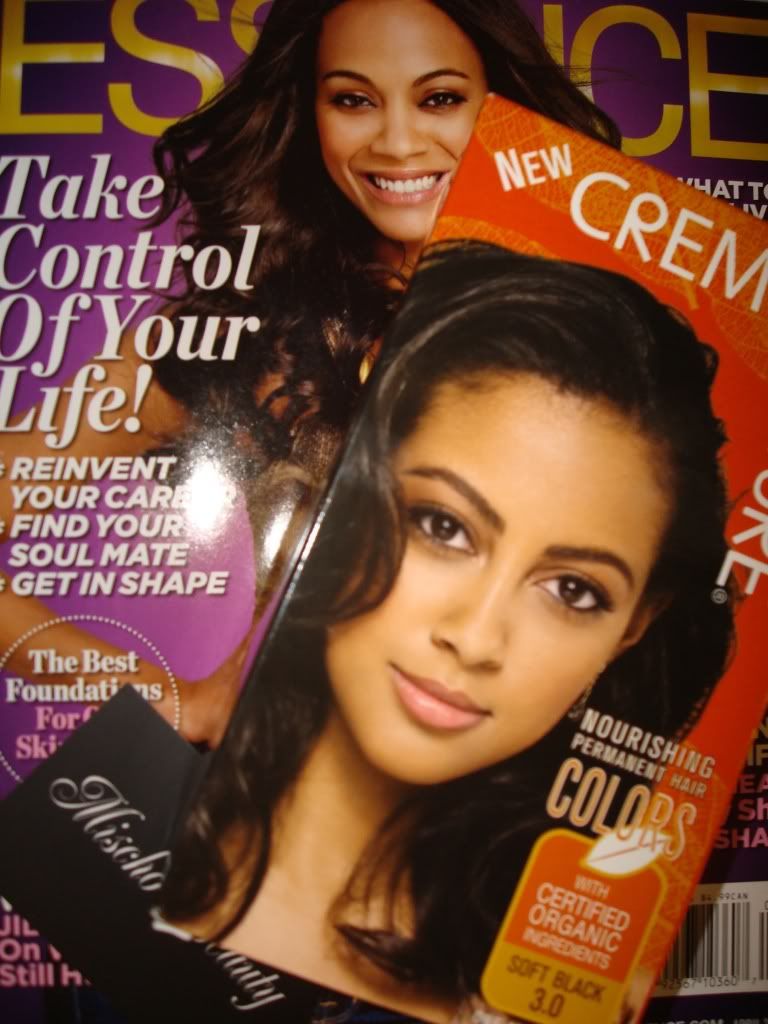
Mischo Beauty Giveaway: Creme of Nature


As part of Creme of Nature's new "I Love Creme of Nature" advertising campaign, I was selected as one of the most influential beauty bloggers! I'm honored and very thankful! And to celebrate this amazing news, I've partnered with Creme of Nature to offer ten (10) winners the following:

- Sunflower & Coconut Detangling Conditioning Shampoo
- Jojoba Conditioner
- Chamomile and Comfrey Healing Conditioner for Dehydrated Hair
- Selection of one (1) Relaxer or one (1) Hair Color

Now here's how you can win:

- Follow me on Twitter (@mischobeauty) and retweet (RT) the following:
"Enter to win a set of Creme of Nature products! http://bit.ly/c7Yjyr {pls RT to win!} #mischobeautygiveaway"

- Join my Facebook fan page (http://bit.ly/9tIZJE)

- Leave a comment below letting me know that you've done the items listed above, and also tell me what you love most about your hair!

Winners will be chosen at random on Monday, March 29th. Giveaway open to US and Canadian residents.

Disclosure: Products in this post were provided for consideration by the company. For more information, please see my disclosure.

Read More......
 

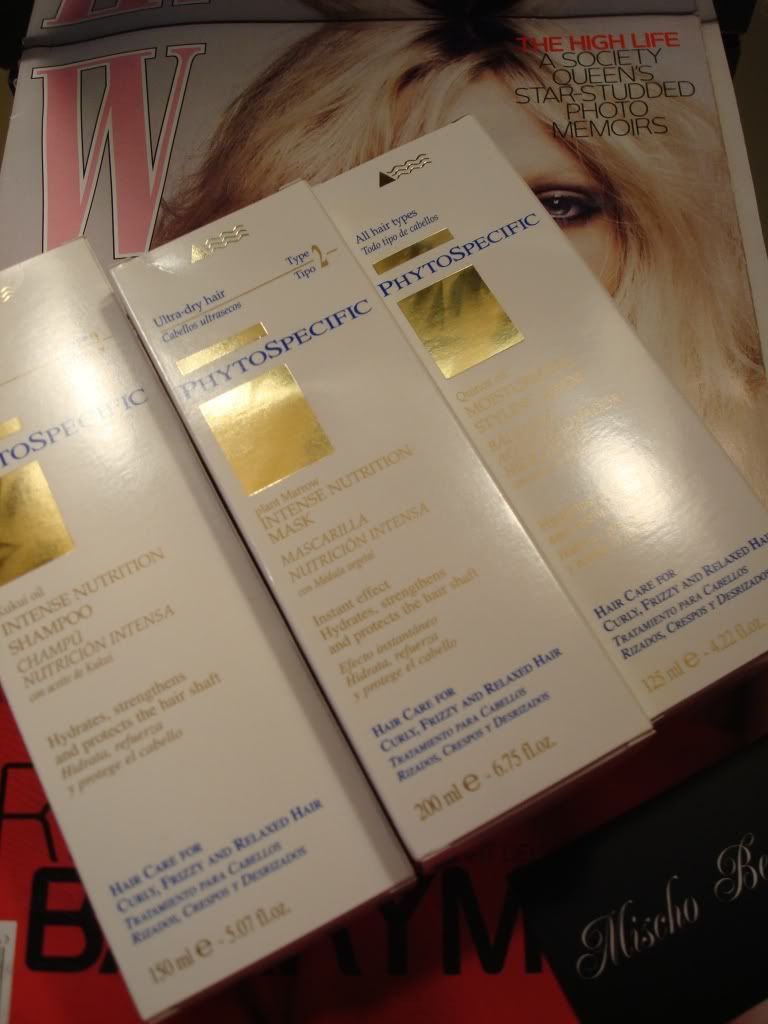
Mischo Beauty School: Hair Relaxers 101 & Phytospecific


I'm inviting those of you who might need a refresher on the difference between "lye" and "no lye" hair relaxers to visit my "Mischo Beauty School: Hair Relaxers 101" post from last month, and please feel free to leave questions for me in the comments section. I'm shifting the focus of today's post to Phytospecific's Level 2 Collection, which is formulated to "hydrate and nourish ultra-dry hair".


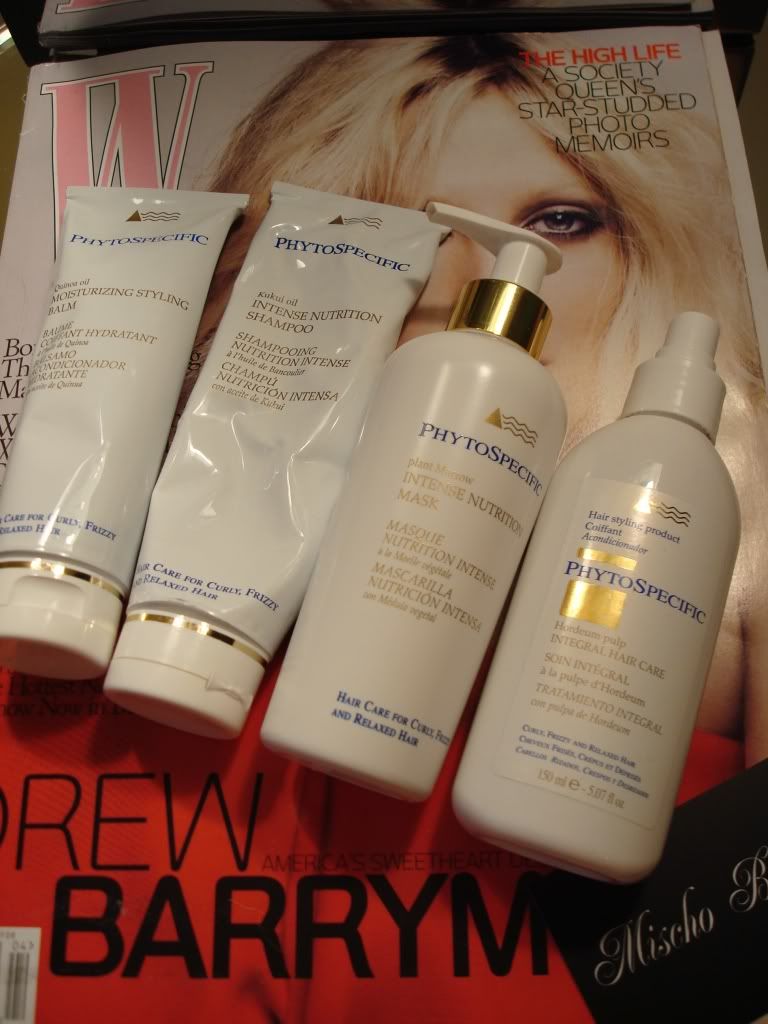
And so to clarify, this collection is also for color-treated and relaxed hair and is formulated with plant extracts and essential oils. About 95% of my hair falls into the "ultra-dry" category, and the other 5% falls into the "relaxed" category (I still have relaxer on my ends in certain areas) - so this collection was perfect for me!


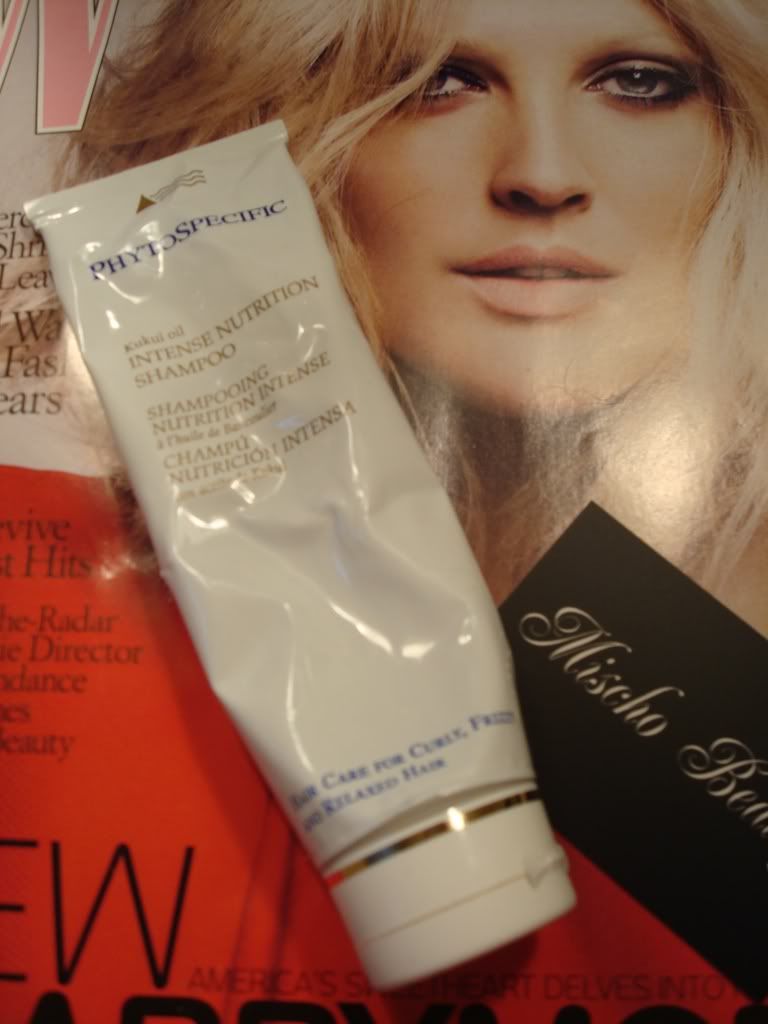
I started with the Intense Nutrition Shampoo, which I think I used a little more than was required (hence the crumpled tube pictured above!). The shampoo is formulated with macadamia, kukui and castor oils and it's consistency was a lot thinner than I'd expected- I believe that's why I used more than was actually needed. It lathered, had a very mild scent and rinsed with no issues.


I used the Intense Nutrition Mask as a deep conditioning treatment, leaving it on for 20 minutes while sitting under a hooded-hair dryer. It's a nourishing conditioner with sunflower, mango and rapeseed oils and it worked like magic! Loved it! It softened and completely detangled my hair and that's a huge deal! My hair type is 4B and when it gets wet, it's very hard to detangle. After using the mask, I was surprised and delighted - I highly recommend it!


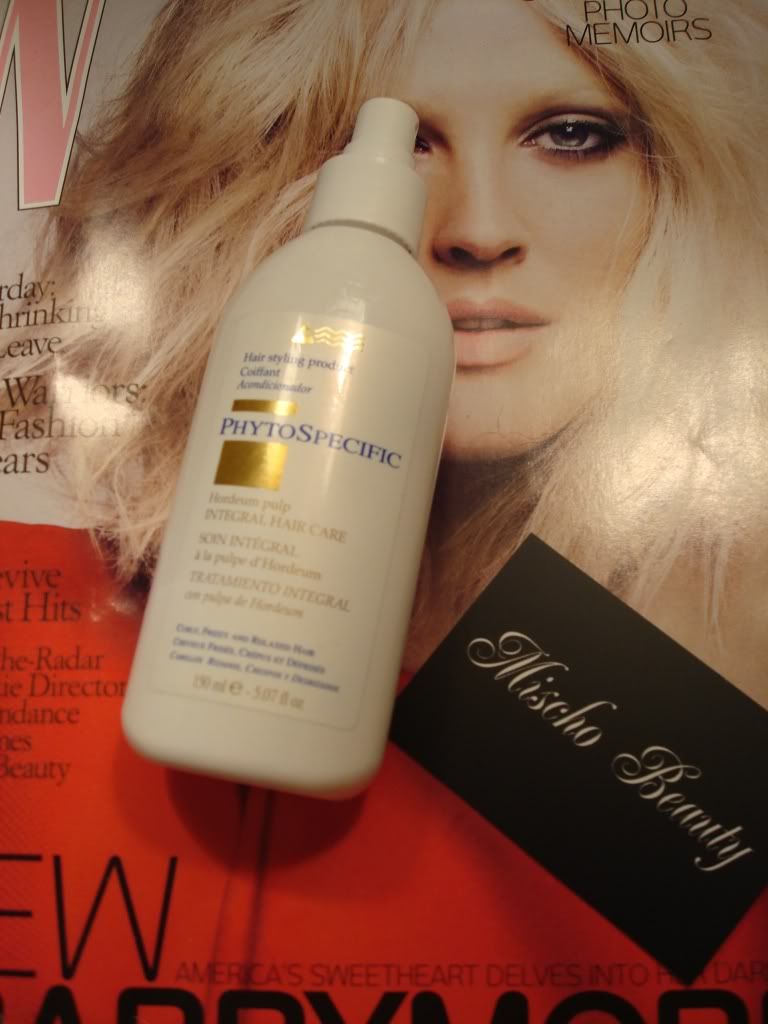
The Integral Hair Care is a leave-in conditioner formulated with wheat protein, pro-vitamin B5 and hibiscus flower extract. It protects against heat styling and UV rays. It was my second favorite product in the collection. I applied this leave-in to my hair while wet and proceeded to blow-dry and flat iron my hair. My finish was AMAZING! Let me repeat that, my finish was AMAZING! My type 4B hair was smooth, shiny and had body and movement. Loved. this. product!


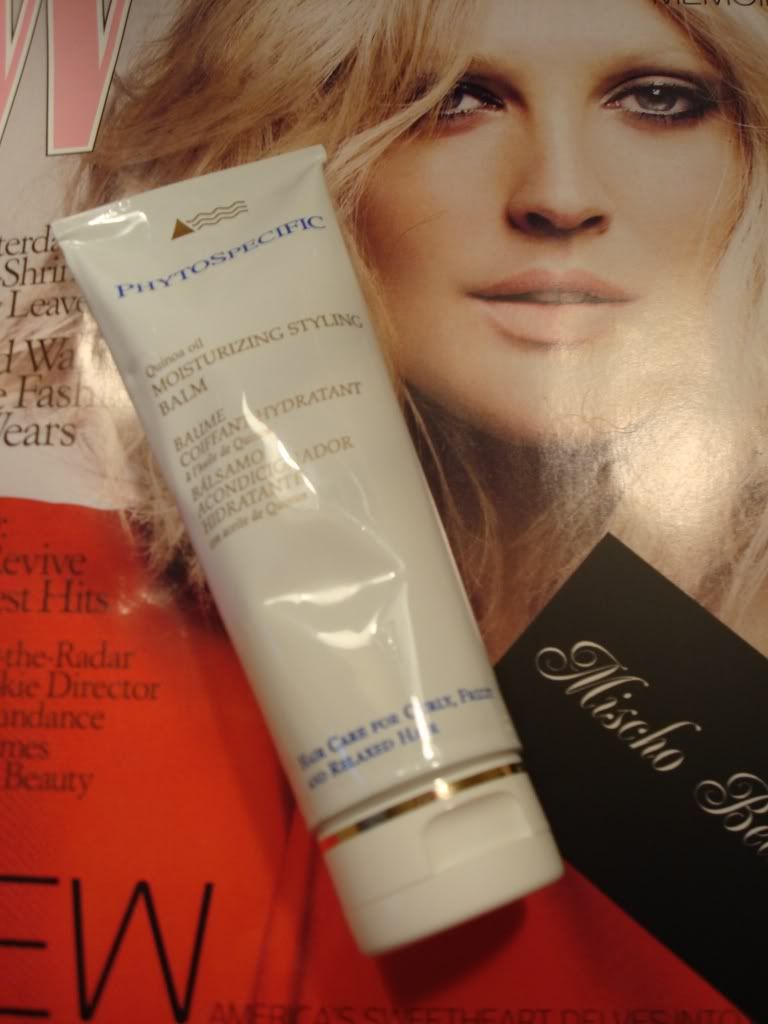
The only product I didn't use was the Moisturizing Styling Balm. My hair seemed to be satisfied with what I'd already used and I loved my finish, so I didn't feel the need to use it. But, just so you're aware-the styling balm is formulated with althea and sunflower extracts, is meant to be used daily and provides light hold and shine. It also protects against UV rays.

Phytospecific products are formulated without parabens, sulfates, synthetic dyes, petro-chemicals and phthalates. The Level 1 Collection is formulated to hydrate normal to dry hair, and the Level 3 Collection is formulated to hydrate, nourish and repair damaged or brittle hair.

I love what I've tried so far and highly recommend it! Have you tried Phytospecific products? If so, any thoughts you'd like to share?

Read More......
 

Mischo Beauty School: Hair Relaxers & Thinning/Breakage 101


First, I'd like to thank you all for sending me your beauty questions- I love answering them, so please keep them coming! Recently, I've received a few questions with regards to the use of hair relaxers resulting in hair breakage and thinning hair, so I've decided to answer the questions with this post.

So, damage from relaxers can result from a number of different reasons. When you're trying to determine the cause, consider the following:

1. The "strength" of the relaxer might be stronger than what's needed for your particular hair texture. Relaxers come in "mild, regular or super" strengths. For example, if your hair texture is "fine" and you choose to relax your hair, you should only use a "mild" strength relaxer. Using anything stronger will definitely result in damage and possibly hair loss!

2. Your stylist may not be applying the relaxer properly. It should ONLY be applied to your NEW hair growth, every 6-9 weeks, or depending on your rate of hair growth. No overlapping onto previously relaxed hair!

3. Thermal styling might be an issue. Are you frequently using a curling iron, flat iron or blow-dryer? If so, they might be contributing to your hair thinning/breakage. If you have relaxed hair, you should use the least amount of heat to style your hair as possible.

4. Do you color your hair? If you use permanent haircolor, the application should be at least two weeks after relaxing or you will experience thinning/breakage and possibly serious hair loss. Also, because your hair will now have to withstand two chemical processes, you should consider using a mild relaxer.

5. If you're thinning near the scalp, then it's probably from improper application or overlapping of the relaxer onto the previously relaxed hair. If you're thinning along the length of the hair, then it's probably due to excessive heat from a curling/flat iron, blow-drying or constant chemical overprocessing.

Hopefully you and your stylist are able to identify the problem and implement a new haircare regimen. If you feel that your problem is different from those listed above, I'd recommend you visit a Dermatologist. Please feel free to leave questions in the " Comments" section! Love your hair.

Read More......
 

Mischo Beauty School: Hair Relaxers 101


I've recently received a few questions on the difference between "lye" and "no lye" relaxers, so I've decided to answer the questions in a blog post. So, let's understand the difference between "lye" and "no lye" relaxers. In general, relaxers break certain chemical bonds in the hair so that they aren't able to reform. This simply means that hair that was once curly, is now permanently straightened.

Certain relaxers use a chemical called "lye" to break the bonds in the hair. "Lye" is a very strong chemical base that will burn your skin and damage your hair if not used correctly. With "no lye" relaxers, another chemical is used in the place of lye and is considered a medium strength base. Research has shown that the use of "no lye" relaxers results in less scalp irritation, but the same safety rules apply. Both types of relaxers will burn your scalp if used incorrectly and it's wrong to assume that compared to "lye" relaxers, "no lye" relaxers take the worry out of straightening your hair. Both types of relaxers contain caustic chemicals.

If you choose to apply your own relaxer, please ask for help! I'll say that again- if you choose to apply your own relaxer, ask for help! You aren't able to see and reach the top and back of your hair and this could lead to an improper application of the relaxer. Also, making sure that the relaxer is thoroughly rinsed can be a challenge. Relaxers should be used according to the manufacturer's directions, left on no longer than the suggested time, carefully washed out with neutralizing shampoo, and followed up with regular conditioning.

Any questions? I'd love to hear your relaxer stories! Love your hair.

Read More......
 

Mischo Beauty School: Hair Relaxers 101


Let's understand the difference between "lye" and "no lye" relaxers. Relaxers break certain chemical bonds in the hair so that they can't reform. This simply means that hair that was once curly, is now permanently straightened and certain relaxers use "lye" to break these bonds. "Lye" is a very strong chemical base that will burn your skin and damage your hair if not used correctly. With "no lye" relaxers, another chemical is used in the place of lye and is considered a medium strength base. Research has shown that the use of "no lye" relaxers results in less scalp irritation, but the same safety rules apply. Both types of relaxers will burn your scalp if used incorrectly and it's wrong to assume that compared to "lye" relaxers, "no lye" relaxers take the worry out of straightening your hair. Both types of relaxers contain caustic chemicals.

If you choose to apply your own relaxer, please ask for help! You aren't able to see and reach the top and back of your hair and this could lead to an improper application of the relaxer. Also, making sure that the relaxer is thoroughly rinsed can be a challenge. Relaxers should be used according to the manufacturer's directions, left on no longer than the suggested time, carefully washed out with neutralizing shampoo, and followed up with regular conditioning.

Any questions? Love your hair.

Please share your relaxer stories!

Read More......
 

Mischo Beauty Pick


I’ve been transitioning from relaxed to natural hair for a few months now and I’ve noticed some breakage and shedding. While the shedding is somewhat natural for this type of transition, I know my breakage is due to my heat styling. I’ve been wearing my hair straight which requires me to blow-dry and flat iron my hair on a very high temperature due to my coarse hair texture.

I recently started using the Kerastase Resistance Bain De Force Shampoo which works to strengthen, restructure and protect damaged hair. It's recommended for naturally weak or chemically weakened hair. I love Kerastase products in general, since becoming familiar with them during my apprenticeship with Vidal Sassoon. For the most part I pretty much knew this wouldn't let me down and so far so good! I definitely recommend this one!

Kerastase Resistance Bain De Force Shampoo

Read More......
 

Mischo Beauty School: Hair Porosity 101


Let's discuss the hair's porosity. Porosity means the ability of the hair to absorb and retain moisture and is used to describe the condition of hair. It falls into the following categories:

a. Very porous
b. Porous
c. Normal
d. Resistant

A “normal” porosity will mean that the cuticle is closed and smooth. Healthy hair will usually have a normal to resistant cuticle, depending on the texture. ”Porous” to “very porous” hair will have a roughened cuticle meaning that the hair is probably damaged. It usually loses moisture very easy and is easily damaged.

To determine the porosity of your hair, feel it - both when wet and dry. If it feels straw-like and rough when dry, or if it feels gummy or slightly rubbery when wet, then you probably have a problem with porous to very porous hair. You should consult your stylist before receiving any chemical services in order to prevent further damage. Haircolor will take much more quickly and strongly and perms and relaxers will process much faster in porous to very porous hair.

Porous to very porous hair can be caused by:

1. Over coloring
2. Bleaching
3. Permanent Waving
4. Relaxing
5. Flat/curling irons
6. Improper blow-drying
7. Environment (sun, salt/chlorinated water)

Love your hair.

Please feel free to e-mail me with any questions!

Read More......
 

Mischo Beauty School: Hair Relaxers & Thinning/Breakage 101


I’ve received many questions on the use of hair relaxers resulting in thinning hair and hair breakage, so I’ve decided to address the issue. Damage from relaxers may result from a number of reasons. At any rate, the problem could be due to one of the following:

1. The "strength" of the relaxer might be stronger than that needed for your particular hair texture. Relaxers come in "mild, regular or super" strengths.

2. Your stylist may not be applying the relaxer properly. It should ONLY be applied to the NEW hair growth, every 6-8 weeks. No overlapping onto previously relaxed hair!

3. Thermal styling may be an issue. Are you frequently using a curling iron, flat iron or blow-dryer? If so, that will definitely contribute to thinning/breakage.

4. Do you color your hair? If you use permanent haircolor, the application should be at least two weeks after relaxing or you will experience thinning/breakage. You should only be using a mild relaxer.

If you're thinning near the scalp, then it's probably from improper application or overlapping of the relaxer onto the previously relaxed hair. If you're thinning along the length of the hair, then it's probably due to excessive heat from a curling/flat iron, blow-drying or constant chemical overprocessing.

Hopefully your stylist will identify the problem and offer you a new haircare regimen. If you feel that your problem is different from those listed above, I'd recommend you visit a Dermatologist.


Love your hair.

Please feel free to e-mail me with any questions!

Read More......
 

Mischo Beauty School: Hair Relaxers 101


Let’s understand the difference between “lye” and “no-lye” hair relaxers. Relaxers break certain chemical bonds in the hair so that they can’t reform. This simply means that hair that was once curly, is now permanently straightened. Certain relaxers use “lye” to break these bonds. Lye is a very strong chemical base that can burn your skin and damage your hair if not used correctly. With "no lye" relaxers, another chemical is used in the place of lye and is considered a medium strength base. Research has shown that the use of "no lye" relaxers results in less scalp irritation, but the same safety rules apply. Both types of relaxers can burn the scalp if used incorrectly. It’s wrong to assume that compared to “lye” relaxers, "no lye" relaxers take the worry out of straightening your hair. Both types of relaxers contain caustic chemicals.

If you choose to apply your own relaxer, please ask for help. You aren’t able to see and reach the top and back of your hair and this could lead to an improper application of the relaxer. Also, making sure that the relaxer is thoroughly rinsed can be a challenge. Relaxers should be used based on manufacturer’s instructions, left on no longer than the prescribed time, carefully washed out with neutralizing shampoo, and followed up with regular conditioning. If you’re in doubt, please follow the manufacturer’s instructions.

Love your hair.

Please feel free to e-mail me with any questions!

Read More......